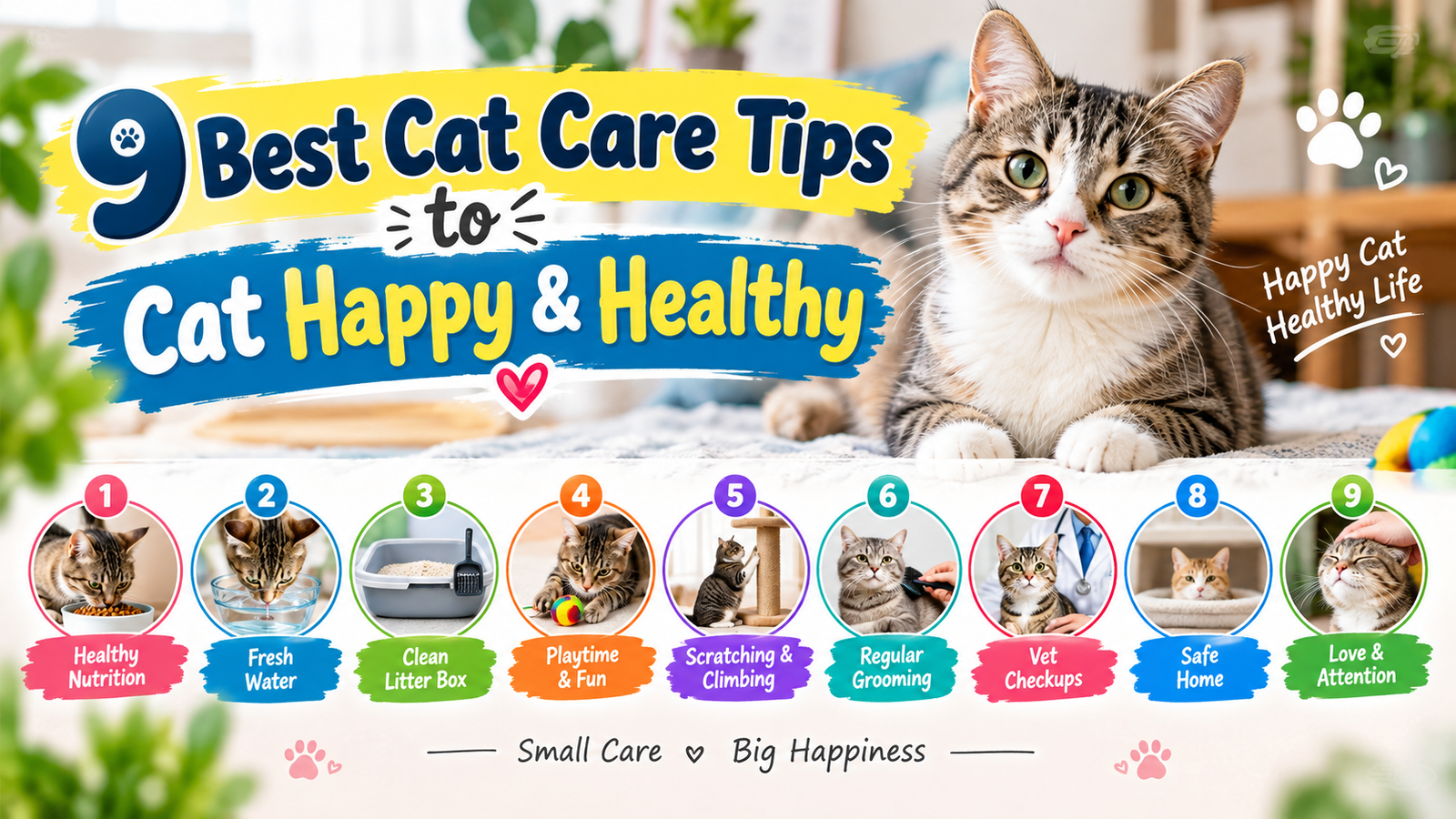
So today we talk about 9 best cats care tips to Keep Your Cat Happy & Healthy. Cats may be independent, but they still depend on us for proper nutrition, a safe environment, regular care, and plenty of mental stimulation. Small daily habits can make a big difference in your cat’s comfort and overall well-being.
From providing fresh water and keeping the litter box clean to encouraging play and scheduling preventive veterinary care, good cat care is about consistency. The following nine tips can help you create a healthier, happier environment for your feline friend.
1. Feed Your Cat a Balanced, Appropriate Diet
Nutrition is one of the foundations of good cat care. Your cat needs a complete and appropriate diet that matches its age, lifestyle, and individual needs.


Avoid making treats a major part of your cat’s daily food intake. If you’re unsure how much your cat should eat, ask your veterinarian for guidance based on your cat’s body condition and lifestyle. The AVMA recommends discussing your pet’s nutrition and feeding amounts with a veterinarian.
Keep Feeding Consistent
Cats often benefit from a predictable feeding routine. Try to provide meals at approximately consistent times each day and avoid making sudden dietary changes unless there is a good reason to do so.
If your cat needs a special diet because of a medical condition, follow your veterinarian’s instructions.
2. Always Provide Fresh, Clean Water
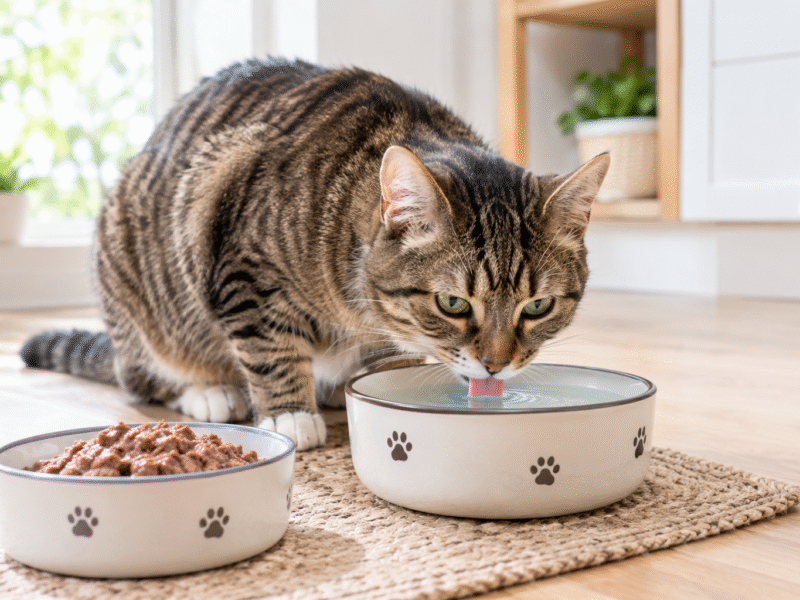
Fresh water should always be available to your cat. Some cats prefer drinking from a wide bowl, while others enjoy moving water from a fountain.


Keep water bowls clean and refill them regularly. Cornell University notes that cats can prefer fresh water, and maintaining access to clean water is an important part of feline care.
Make Water Easy to Access
If you have a large home or multiple cats, consider placing water in more than one convenient location. Keep water and food areas separate from the litter box.
3. Keep the Litter Box Clean
A clean litter box is essential for a comfortable cat. Cats can be particular about where they eliminate, and an unpleasant or poorly located litter box may contribute to litter-box avoidance.


Cornell recommends providing one litter box per cat, plus one extra, and keeping boxes clean and accessible.
Choose the Right Location
Place the litter box somewhere quiet and easy for your cat to reach. Avoid locations where your cat could feel trapped or constantly disturbed.
If your cat suddenly stops using the litter box, don’t simply assume it is a behavior problem. Medical issues can sometimes cause changes in urination or defecation habits, so a veterinary examination may be appropriate.
4. Give Your Cat Daily Playtime
Play is more than entertainment. It gives cats an opportunity to express natural behaviors such as chasing, pouncing, stalking, and exploring.
Try interactive toys, wand toys, puzzle feeders, balls, or other safe toys your cat enjoys. The AVMA recommends puzzles, games, and interactive toys as ways to encourage natural behaviors and positive interactions.


Create Short Play Sessions
You don’t necessarily need one long play session. Several shorter sessions throughout the day can keep your cat interested without becoming overwhelming.
Always supervise toys that contain strings, small detachable pieces, or other components that could be swallowed.
5. Provide Scratching Posts and Climbing Opportunities
Scratching is a normal feline behavior. Instead of trying to eliminate it, give your cat appropriate places where scratching is allowed.
A sturdy scratching post can protect furniture while giving your cat a suitable outlet. Cat trees, shelves, and climbing structures can also provide opportunities for movement and exploration.


Make the Environment Interesting
Cats benefit from environments that allow them to climb, explore, hide, rest, and observe their surroundings. Enrichment can be especially useful for indoor cats.
Cornell notes that opportunities for natural predatory behaviors, including climbing and chasing toys, can contribute to environmental enrichment.
6. Groom Your Cat Regularly
Many cats do a great deal of grooming themselves, but they can still benefit from regular brushing.


Brushing can help remove loose hair and may reduce the amount of fur your cat swallows while grooming. Long-haired cats may require more frequent grooming to help prevent mats and tangles.
Make Grooming Comfortable
Start slowly and keep grooming sessions positive. Use a brush appropriate for your cat’s coat and avoid pulling on tangled fur.
If your cat develops severe mats, irritated skin, or other coat problems, ask a veterinarian or qualified professional groomer for help rather than attempting difficult grooming yourself.
7. Schedule Regular Veterinary Care
Cats are experts at hiding signs of illness, so waiting until a cat looks obviously sick isn’t always the best approach.
Preventive veterinary care can help identify problems earlier and gives you an opportunity to discuss nutrition, weight, vaccinations, parasite prevention, dental care, and other needs specific to your cat. The AVMA emphasizes regular preventive veterinary care as an important part of keeping pets healthy.


Pay Attention to Changes
Get veterinary advice when you notice significant changes in your cat’s:
- Appetite
- Drinking
- Weight
- Energy level
- Urination
- Bowel habits
- Grooming behavior
- Breathing
- Mobility
- Behavior
A sudden change shouldn’t automatically be dismissed as your cat simply “getting older.”
8. Keep Your Cat’s Home Safe
A healthy cat also needs a safe living environment. Check your home for hazards that could cause injury or poisoning.
Keep potentially dangerous household substances, medications, chemicals, and unsafe objects away from your cat. Windows and balconies should also be secured where necessary.
If your cat wears a collar, a breakaway design with identification information can provide an additional safety measure. Microchipping can also help identify a lost cat.
Give Your Cat a Comfortable Resting Area
Cats appreciate having a quiet place where they can sleep without being disturbed. A comfortable bed, blanket, cat tree, or elevated resting area can give your pet a place to relax.
Older cats may need easier access to food, water, litter boxes, and favorite resting places if mobility becomes more difficult.
9. Give Your Cat Love, Attention, and a Predictable Routine
Every cat has its own personality. Some cats love cuddling, while others prefer sitting nearby and interacting on their own terms.
Respect your cat’s boundaries while providing regular positive interaction. Talking to your cat, playing together, offering gentle affection, and maintaining a predictable routine can help strengthen your relationship.
Watch Your Cat’s Body Language
Learning to recognize your cat’s signals can make everyday interactions easier. If your cat moves away, flattens its ears, becomes tense, or otherwise appears uncomfortable, give it some space.
Positive interactions should help your cat feel safe rather than forced.
Simple Daily Cat Care Checklist
A simple routine can make cat care much easier. Each day, try to:
- Provide fresh food according to your cat’s feeding plan.
- Refresh drinking water.
- Scoop the litter box.
- Spend time playing or interacting with your cat.
- Check your cat’s general behavior and appearance.
- Provide opportunities for scratching and enrichment.
- Give your cat a clean, comfortable resting area.
When Should You Contact a Veterinarian?
Contact your veterinarian if you notice unusual or persistent changes in your cat’s health or behavior.
Particular attention should be paid to changes involving urination. Cornell explains that urinary and other medical problems can sometimes contribute to litter-box changes, and cats may not always appear obviously ill.
For emergencies, severe breathing difficulty, inability to urinate, significant injury, poisoning, or other serious symptoms, seek veterinary care promptly.
Final Thoughts
Taking care of a cat doesn’t have to be complicated. The most important habits are often simple ones: provide appropriate nutrition, fresh water, a clean litter box, opportunities for play and scratching, regular grooming, a safe home, and preventive veterinary care.
Most importantly, get to know your individual cat. Pay attention to changes in appetite, behavior, activity, and daily habits. When you combine consistent everyday care with appropriate veterinary attention, you can create an environment where your cat has a better opportunity to stay comfortable, active, and happy.
A little attention every day can go a long way toward building a strong and rewarding relationship with your feline companion.